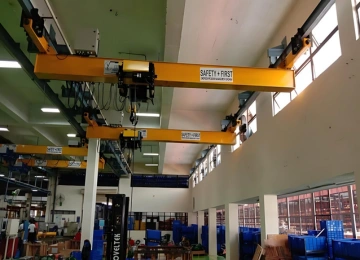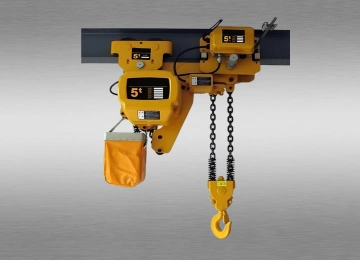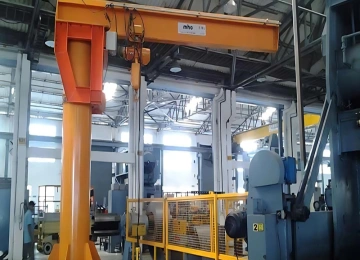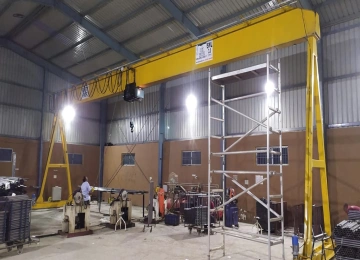
The construction manufacturing industry is evolving rapidly, driven by advancements in technology, safety standards, and growing demand from the construction, infrastructure, and industrial sectors. Today's cranes are no longer just for carrying heavy loads; they are becoming smarter, faster, and highly integrated with the technology. It is also environmentally friendly. From automation and digital monitoring to advanced materials and energy-efficient systems, modern crane manufacturing is focused on delivering higher performance with greater reliability.
We all know that as the industries continue to expand and projects become more complex, the role of crane manufacturers in Chennai has become very important in handling things. These manufacturers are adapting to global trends, and they focus on the right crane to be manufactured to meet local industry needs, offering innovative lifting solutions that support safer operations, improved productivity, and long-term value.
In this blog, we are going to discuss the future and key trends of crane manufacturing.
Smart cranes powered by Internet of Things (IoT) technology are transforming the way lifting operations are monitored and managed. By using sensors, connected systems, and real-time data tracking, smart cranes can provide continuous information on load weight, equipment health, operation condition, and also performance efficiency.
This allows the operators and the managers to detect the issues early, reduce downtime, and improve overall productivity. IoT integration also helps in enhancing the safety safe and the efficiency of the work done by the cranes. They also reduce the downtime and overload risks. As crane manufacturing continues to evolve, smart crane technology is becoming a key driver for more efficient, data-driven, and safer lifting operations.
Hybrid and electric crane technologies are a significant aspect of the new crane manufacturing process as industries consider the concepts of sustainability, cost management, and future-oriented operations. These cranes operate electric motors, battery systems, and combinations of hybrid power to provide the desirable lifting performance and minimized fuel use and emission. With the increase in the rigorousness of environmental laws, most firms are turning to cleaner lifting technologies that can sustain the long-term environmental objectives.
The Reduced operating cost is one of the benefits of electric cranes and hybrid cranes. Less fuel use, smaller engine parts and more efficient power transmission services to reduce the maintenance requirements and the total costs. The reduced noise also renders these cranes applicable in indoor locations and other urban constructions where noise is central. Electric and hybrid cranes will have a bigger part in the future of lifting equipment with the continued advancement in battery technology and charging infrastructure.
Innovation in safety is a key concern in the contemporary crane production. High safety measures are supported by artificial intelligence (AI) surveillance that ensures that the risk of accidents is reduced and the job site is more aware. Standard cranes have intelligent sensors, cameras, and AI-powered software, which monitor the crane movement, load movements, and the environment around it in real time.
Innovation in safety is a key concern in the contemporary crane production. High safety measures are supported by artificial intelligence (AI) surveillance that ensures that the risk of accidents is reduced and the job site is more aware. Standard cranes have intelligent sensors, cameras, and AI-powered software, which monitor the crane movement, load movements, and the environment around it in real time.
The crane design and construction are evolving due to the use of lightweight and high-strength materials. The use of advanced steel alloys and engineered materials enables the manufactures to enhance the lifting capacity and maintain the overall weight at the desired level. This strength to weight balance enhances the crane performance and efficiency of the crane.
Reduced weight crane structures consume less energy to run which justifies higher fuel and energy efficiency. Transportation and installation is also made easy because of reduced weight that saves time and cost during set up. Stronger materials also enhance fatigue, corrosion and wear resistance, which contribute to the increased life of crane services and enhancing the overall structural life of cranes, which is important since the crane is used in construction as well as demolition.
Cranes maintenance and data analytics are changing the maintenance and service of cranes. Modern cranes are not dependent on the regular maintenance schedule, but real-time information helps to track the status of the equipment and its performance patterns. Sensors are used to monitor vibration, temperatures, cycles of loading and usage habits so as to identify the early indicators of wear or failure.
Maintenance teams can be able to identify issues early on so that they can plan on how to repair them before they break down. This minimizes unplanned downtime, minimizes costs on repairing equipment and enhances the reliability of equipment collectively. Data analytics is also used to optimize maintenance planning and resource allocation and results in improved equipment utilization and increased crane lifespan.
The need to have custom-built cranes is on the rise because projects are becoming more complicated and the needs of the industry are also more specialized. The standard examples of cranes might fail to suit the services of specific environment, types of loads, or space constraints. Custom crane manufacturing enables firms to design cranes that are optimized to the specific operational conditions of the firm. crane manufacturers in Chennai can provide the best.
These types of crane may be customized to suit certain load capacities, lifting height, control, and environmental issues. Custom designs enhance the level of safety, efficiency, and performance due to the existence of project-specific needs. This method also contributes to the realization of superior long term value of their crane investments by the businesses.
Simulation and digital design tools are making a contribution to the enhancement of accuracy and speed of crane manufacturing. High-end software enables engineers to produce high-quality digital models of cranes and test them in the different load and stress conditions before actual production commences.
Simulation allows finding the weak points in the design at an early stage and enables the engineers to optimize the performance, balance, and safety. This minimizes design flaws, decreases design development cycles, and enhances the quality of products. Digital design also facilitates improved teamwork as well as expedited innovation in crane technology.
Also Read This: Tips to Choose a Reliable EOT Crane for Industrial Applications
The future of crane manufacturing is being shaped by innovation, sustainability, and smarter engineering practices. From electric and hybrid technologies to advanced safety systems, predictive maintenance, and digital design tools, modern cranes are becoming more efficient, reliable, and adaptable to changing industry needs. These advancements not only improve lifting performance but also support safer job sites, lower operating costs, and longer equipment lifespan. As industries continue to grow and infrastructure projects become more complex, partnering with trusted crane manufacturers in Chennai plays a critical role in staying competitive.
One of the top Crane Manufacturers in Chennai is MH Cranes & Hoists. We are known to be leading manufacturers of EOT Crane, Electric Hoist, Electric Wire Rope Hoist, Electric Chain Hoist, Single Girder EOT Crane, Double Girder EOT Crane, Gantry Crane, JIB Crane, Portable Crane, Underslung Crane, Light Crane System, Standard Electric Wire Rope Hoist, MWH Series Wire Rope Hoist, Standard Budgetary Hoist, Light Duty Hoist, Ultra Low Head Room Hoist, Electric Winch, Engineering Crane Manufacturers in Chennai.
© 2024 Mh Cranes & Hoists. All Rights Reserved. Design and Developed By