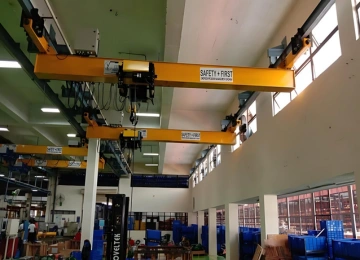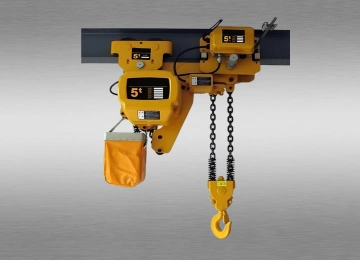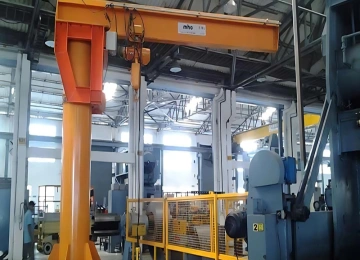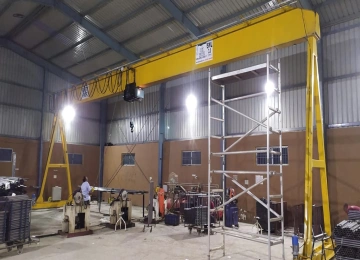
In the modern industrial world, carrying heavy materials from one place to another safely and smoothly does not depend on the power of a lifting machine. An EOT crane must be able to lift various loads, move efficiently and reliably even in tough working conditions. That is the reason that the modern manufacture of the crane EOT gathers the skill and know-how of engineers and high technology in almost each of its steps. EOT crane manufacturers in Chennai are turning to a mixture of traditional engineering knowledge and modern technology to design the structure of the crane, select components, install control systems, test equipment, and support operation. This approach helps industries get lifting equipment that is designed around their actual requirements rather than relying on a basic standard configuration.
Let's dive into this blog to explore how technology and engineering come together in modern EOT crane manufacturing.
“A modern EOT crane brings power, precision, and technology together in one system.”
EOT cranes have long been an important part of manufacturing plants, warehouses, fabrication units, engineering facilities and other industrial environments. While their primary purpose is still to lift and move materials, the way they are designed and manufactured has changed considerably. Modern manufacturers use digital design tools, improved fabrication methods, advanced motor controls and automation technologies to improve the overall performance of the crane. Technology does not replace engineering; instead, it gives engineers better ways to design, analyse, manufacture, and operate lifting equipment.
Engineers must determine beforehand the purpose and location for which the crane is to be manufactured. The requirements for a crane used in a heavy engineering or fabrication shop could be quite different from those of one in a warehouse. These factors become important, and considering them will help manufacturers design a crane that will be more appropriate for the conditions of actual work rather than just taking a standard crane design.
Lifting capacity: Determines the amount of load the crane needs to handle safely.
Span: Defines the distance the crane bridge needs to cover.
Lifting height: Determines how high the load needs to be raised.
Duty cycle: Indicates how frequently the crane will be operated.
Travel speed: Influences how quickly materials can be moved.
Working environment:Helps determine suitable materials and components.
Available space:Affects the overall crane configuration and dimensions.
The engineering phase of a modern EOT crane manufacturer project will involve computer-aided design and digital modelling. The engineers can make accurate crane model representations and check the position, size, clearance and construction of parts before they are manufactured. Design and Analysis Software also can be of help in calculations and can allow engineers to establish the response of various components to anticipated loads. Modification can be done at the design phase and not after the fabrication phase. This will streamline the process for better coordination between engineering, manufacturing and installation teams as well as minimise rework.
Also Read This:11 Powerful Benefits of EOT Cranes Every Industry Should Know
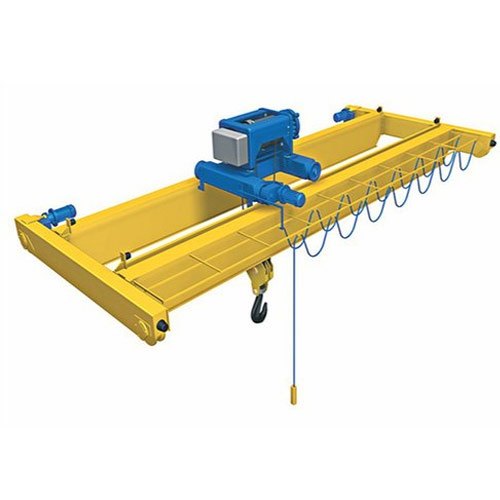
The EOT crane is not a single machine, but it is a combination of structural, mechanical and electrical components. The components must be specifically chosen and included in accordance with the requirements for the crane's applications. These specifications may vary with a change in lifting capacity, operating frequency or working environment.
Bridge girder: Provides the main structural framework of the crane.
End carriages: Carriage is supported and can run on runways.
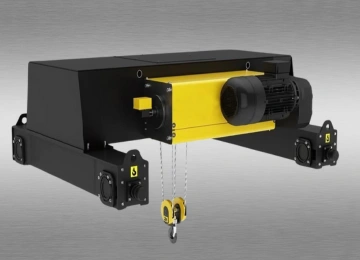
Hoist: Carries out the main lifting and lowering mechanism.
Trolley: Moves the hoist horizontally across the bridge.
Motors and gearboxes: Give required motion and lifting ability.
Brakes: Lift and stop crane movements.
Wheels: Support travelling movement along the runway.
Control panel: Coordinates electrical and operational functions.
Control system: Operators can control lifting, lowering, and travelling movements.
The movement of cranes is now more controlled and precise via technology. Modern EOT cranes can use variable frequency drives and advanced motor control systems to regulate lifting and travelling speeds. The crane can accelerate and decelerate in a more gradual fashion as opposed to sudden starts and stops. The choice of system will depend on the crane's setup and the requirements for operation of the facility. This could be useful, in particular, if, for example, the load has to be placed carefully. In addition to this, depending on the application, several different options for control are available, including:
With safety as a critical point, safety needs to be taken care of from the initial design phase if it is used for handling heavy industrial loads. Modern EOT cranes can include various safety measures to facilitate safe and controlled performance of the crane and minimise the risks associated with improper crane movement and overloading. These features, however, are in addition to good system design, components and manufacturing accuracy, correct installation, inspection and safe operating procedures. Even with the most powerful and complex control system there is, however, poor engineering and failure to choose the right equipment can cause problems.
After finishing the engineering design, it will be necessary to turn it into an actual industrial lifting system. Manufacturing may include material preparation, cutting, welding, machining, assembly alignment, electrical installation and finishing. The precision of each phase in the process may be able to impact the overall performance of the crane. The test is an opportunity to ensure proper integration of the mechanical and electrical systems and also ensure that the different mechanical and electrical systems are integrated and performing as they should prior to going into normal industrial service. Before starting in regular operation, important functions must be performed on the crane. The following tests and inspections can apply:
“When engineering meets innovation, every lift becomes a step toward smarter industry.”
The requirements of industrial facilities are rarely the same. They can be different regarding the available floor space, the dimensions of the building, the load type, the lifting height, the manufacturing process, and the operating frequency, etc. Due to this, customised EOT crane solutions can prove helpful if the standard design doesn't correspond to the application. Correctly configured cranes are more effective at utilising available space and can provide the required lifting and travelling coverage.
EOT crane manufacturing has changed from heavy mechanical strength to the present scientific development. Combines structural engineering, mechanical systems, electrical controls, digital design, automation and manufacturing expertise. Engineering provides better tools for this through technology, which is utilised to create and manage cranes to fit industrial needs. They play an important role during the idea design phases, right up until the time of testing and installation. The EOT crane manufacturers in Chennai will continue to advance as industries adopt smarter and more automated processes. Precision engineering and the use of modern technology will continue to be crucial in the evolution of lifting equipment that can keep pace with the ever-changing requirements of industrial material handling.
One of the top Crane Manufacturers in Chennai is MH Cranes & Hoists. We are known to be leading manufacturers of EOT Crane, Electric Hoist, Electric Wire Rope Hoist, Electric Chain Hoist, Single Girder EOT Crane, Double Girder EOT Crane, Gantry Crane, JIB Crane, Portable Crane, Underslung Crane, Light Crane System, Standard Electric Wire Rope Hoist, MWH Series Wire Rope Hoist, Standard Budgetary Hoist, Light Duty Hoist, Ultra Low Head Room Hoist, Electric Winch, Engineering Crane Manufacturers in Chennai.
© 2024 Mh Cranes & Hoists. All Rights Reserved. Design and Developed By